Quantcast
Channel: Male Nude Photography
Viewing all 3244 articles
Browse latest View live

sarraounia: Some Ancient African Kingdoms: Great Zimbabwe,...

$
0
0


sarraounia:

Some Ancient African Kingdoms: Great Zimbabwe, Numidia, the Mali Empire, the Songhay Empire. Since Europeans started to talk about and attempted to claim Ancient Egypt history (that popular kingdom people “love” but they don’t even know why), everyone followed…You can all have it.

  • The Mali Empire or Manden Kurufaba was a West African empire of the Mandinka from c. 1230 to c. 1600. The empire was founded by Sundiata Keita and became renowned for the wealth of its rulers, especially Mansa Musa I. The Mali Empire had many profound cultural influences on West Africa, allowing the spread of its language, laws and customs along the Niger River. It extended over a large area and consisted of numerous vassal kingdoms and provinces. Today part of Burkina Faso, Gambia, Guinea, Ivory Coast, Mali, Mauritania, Niger, Senegal.
  • The Songhay Empire was a state located in western Africa from the early 15th to the late 16th century. This empire bore the same name as its leading ethnic group, the Songhai. Its capital was the city of Gao (today in northern Mali), where a Songhai state had existed since the 11th century. Its base of power was on the bend of the Niger River in present day Niger and Burkina Faso.
  • Numidia (202 BC – 46 BC) was an ancient Amazigh kingdom located on the province of Mauretania (Ancient “Libyan” land) to the west, the Roman province of Africa (modern day Tunisia) to the east, the Mediterranean Sea to the north, and the Sahara Desert to the south. Its people were the Numidians.
  • The Kingdom of Zimbabwe (1220–1450) was a kingdom located in the territory of modern-day Zimbabwe. It is famous for its capital, Great Zimbabwe, the largest stone structure in Southern Africa until recent times.

Pictures: Great Zimbabwe ruins and remains of the Numidia Kingdom. Credits: List of Kingdoms in pre-colonial Africa
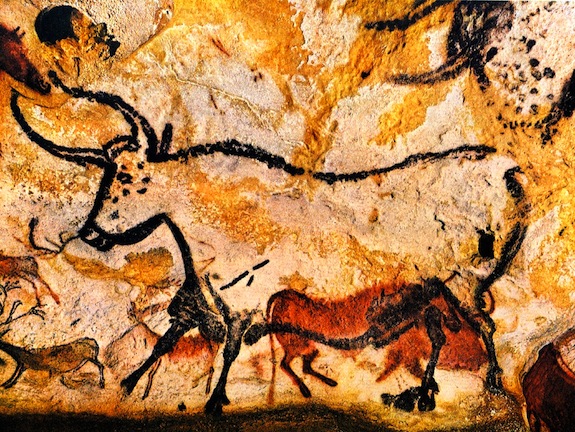

Surprising Science: cavemen were much better at illustrating animals than artists today

Archaeological News: Largest Egyptian Sarcophagus Identified

$
0
0
Archaeological News: Largest Egyptian Sarcophagus Identified:

archaeologicalnews:

image

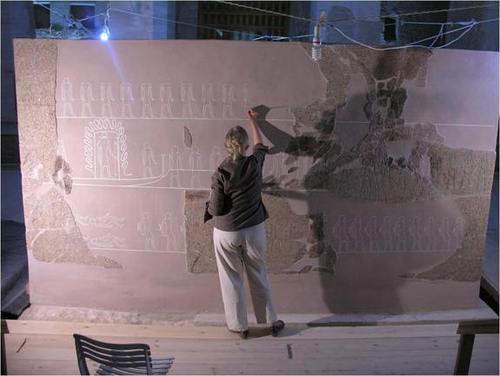
The largest ancient Egyptian sarcophagus has been identified in a tomb in Egypt’s Valley of the Kings, say archaeologists who are re-assembling the giant box that was reduced to fragments more than 3,000 years ago.

Made of red granite, the royal sarcophagus was built for Merneptah, an Egyptian pharaoh who lived more than 3,200 years ago. A warrior king, he defeated the Libyans and a group called the “Sea Peoples” in a great battle.

He also waged a campaign in the Levant attacking, among others, a group he called “Israel” (the first mention of the people). When he died, his mummy was enclosed in a series of four stone sarcophagi, one nestled within the other.

Archaeologists are re-assembling the outermost of these nested sarcophagi, its size dwarfing the researchers working on it. It is more than 13 feet (4 meters) long, 7 feet (2.3 m) wide and towers more than 8 feet (2.5 m) above the ground. It was originally quite colorful and has a lid that is still intact. 

Read more.

thejadecompendium: Ancient Tombs Discovered in Pakistan’s...

African techno-traditions at 70,000 years ago.

Archaeology and Volunteer Work Abroad

$
0
0
Archaeology and Volunteer Work Abroad:

One of the best ways to get in touch with a country and its people is by understanding its past. Volunteering abroad on one of our archaeology projects in Romania or Peru is a great way to discover their rich histories.

Volunteer on an Archaeology Project

You can choose to spend time in either Romania excavating ruins in the thrilling region of Transylvania or in Peru uncovering the rich past of the Inca Empire. You don’t need any previous archaeological experience to join one of the digs. Romania and Peru offer magnificent sights for anyone interested in archaeology and history and will be a great adventure for volunteers from all backgrounds!

Archaeological News: Researchers find evidence of early man in caves near Naples

$
0
0
Archaeological News: Researchers find evidence of early man in caves near Naples:

archaeologicalnews:

image

Rome - Researchers are poring over thousands of tiny artifacts - including a child’s milk tooth - found in a southern Italian cave that appears to have been shared by both Neanderthals and early man.

The caves of Roccia San Sebastiano, which overlook the Tyrrhenian Sea north of Naples, are being combed for traces of those who once lived there.

On the slopes of the medieval fortress of Montis Dragonis, near Mondragone in Caserta province, researchers say they’ve uncovered layers of history, rich in early historical finds.

The discovery is telling them “a story of the evolution that goes from 40,000 to 20,000 years ago, when the cave was used for uninterrupted time by Neanderthals and Sapiens,” says prehistoric archaeologist Carmine Collina.

Read more.

Palaeolithic Artists Rocked!!

$
0
0
Palaeolithic Artists Rocked!!:

archaeoprehistorica:

image

This is a prehistoric illustration of an elephant from the Libian Tadrart Acacus. Credit: Citation: Horvath G, Farkas E, Boncz I, Blaho M, Kriska G (2012) Cavemen Were Better at Depicting Quadruped Walking than Modern Artists: Erroneous Walking Illustrations in the Fine Arts from Prehistory to Today.

Prehistoric artists were better at portraying the walk of four-legged animals in their art than modern man, according to new research published December 5 in the open access journal PLoS ONE by Gabor Horvath and colleagues from Eotvos University (Budapest), Hungary.

Read more at: http://phys.org/news/2012-12-cavemen-animals-modern-artists.html#jCp


archaeology: Gladiator’s Tomb to Be Reburied A lack of fundings...

$
0
0


archaeology:

Gladiator’s Tomb to Be Reburied

A lack of fundings is forcing Italian archaeologists to bury again the large marble monument of Marcus Nonius Macrinus, a general and consul who achieved major victories in military campaigns for Antoninus Pius, the Roman emperor from 138 to 161 A.D., and Marcus Aurelius, emperor from 161 to 180 A.D.

Unearthed in 2008 on the banks of the Tiber near the via Flaminia, north of Rome, the tomb, complete with the dedicatory inscription, was hailed as “the most important ancient Roman monument to come to light for 20 or 30 years.”

Although the tomb collapsed in antiquity because of floods, its marble columns, carvings and friezes remained perfectly preserved, sealed by the Tiber’s mud.

Rome’s officials had planned to fully reconstruct the monumental tomb as the centerpiece of a new archaeological park, but the project failed due to a tight budget and a lack of private sponsors.

“It is a painful choice, but we cannot risk losing the monument. The marbles can’t face another winter, we must bury the site in order to preserve it,” Mariarosaria Barbera, Rome’s archaeological superintendent, told the daily La Repubblica.

anth-receptor: Paleolithic Technology and Human EvolutionStanley...

$
0
0


anth-receptor:

Paleolithic Technology and Human Evolution
Stanley H. Ambrose 

Human biological and cultural evolution are closely linked to technological innovations. Direct evidence for tool manufacture and use is absent before 2.5 million years ago (Ma), so reconstructions of australopithecine technology are based mainly on the behavior and anatomy of chimpanzees. Stone tool technology, robust australopithecines, and the genus Homo appeared almost simultaneously 2.5 Ma. Once this adaptive threshold was crossed, technological evolution was accompanied by increased brain size, population size, and geographical range. Aspects of behavior, economy, mental capacities, neurological functions, the origin of grammatical language, and social and symbolic systems have been inferred from the archaeological record of Paleolithic technology.

SCIENCED! I still love this guy-Bill Nye, the Science Guy, that...

$
0
0


SCIENCED! I still love this guy-Bill Nye, the Science Guy, that is.

"The spiritual journey is individual, highly personal. It can’t be organized or regulated. It isn’t..."

$
0
0
“The spiritual journey is individual, highly personal. It can’t be organized or regulated. It isn’t true that everyone should follow one path. Listen to your own truth.”

- Ram Daas (via bodhisattvaextraordinaire)

Photo

hardtimesblues: This is the Asinarian Gate. The Byzantine...

$
0
0


hardtimesblues:

This is the Asinarian Gate. The Byzantine General Belisarius and his men entered Rome from it when they reconquered the Eternal City back to the Empire in 536, 60 years after the fall of Rome in 476. The Western Roman Empire did fall but the Eastern Roman Empire survived until 1453. Byzantine was a term historians started to use way after Constaninople fell. They called themselves Romans and their Emperor was in the same succession line of Augustus. The Emperor at that time was Justinian and he wanted to reconquer the lost territories back to the Empire. First they ran the Vandals out of North Africa. Then it was Italy’s turn. Italy at the time was ruled by the Ostrogothic Kingdom. Belisarius first reconquered Sicily, then the south of Italy and finally he took Rome. But it wasn’t over. The Ostrogoths came back in forces and sieged Rome for nearly two years. They cut off the water supplies by damaging the acqueducts (Rome lost its water for centuries) and they brought Rome to its knees. But other Byzantine forces threatened Ravenna, the Ostrogoth capital, and the Goths ran to defend it. The war lasted 20 years, it utterly destroyed Italy, it took centuries to recover. But the Roman Empire recovered Italy and most of its Mediterraneum territories. But only for a few decades then Arabs, Lombards, Slavs, Avars left the Empire only with Greece, Anatolia and part of Italy. But nevertheless the Empire survived until 1453 when Constantinople fell to the Turks.

ancientpeoples: Gold Finger Rings Roman 1st/2nd Century AD Gold...

$
0
0


ancientpeoples:

Gold Finger Rings

Roman

1st/2nd Century AD

Gold finger-ring; in the form of a serpent coiled in a spiral; in one of the eyes is a small emerald.

Dimensions
Diameter: 2.4 centimetres
Weight: 4.53 grammes

Source: British Museum


Building The Genetic Bridge

$
0
0
Building The Genetic Bridge:

theadvancedapes:

Scientists have discovered a gene that is unique to humans and plays a significant role in language and speech.  This may be one of the first functional genes identified that makes us different from the great apes.  However, we should expect to find other genes that play a critical role in causing our cognitive capabilities.  Future research will need to be done to understand what genes played a unique role throughout our evolution in making us human.

elegantbuffalo: The largest ancient Egyptian sarcophagus has...

$
0
0


elegantbuffalo:

The largest ancient Egyptian sarcophagus has been identified in a tomb in Egypt’s Valley of the Kings, say archaeologists who are re-assembling the giant box that was reduced to fragments more than 3,000 years ago.

Made of red granite, the royal sarcophagus was built for Merneptah, an Egyptian pharaoh who lived more than 3,200 years ago.  When he died, his mummy was enclosed in a series of four stone sarcophagi, one nestled within the other.

It is more than 13 feet (4 meters) long, 7 feet (2.3 m) wide and towers more than 8 feet (2.5 m) above the ground.

softasdescendingwings: “Sungir is an Upper...

$
0
0


softasdescendingwings:

“Sungir is an Upper Paleolithic archaeological site in Russia, about 200 km east of Moscow, on the outskirts of Vladimir. The site is approximately 28,000 to 30,000 years old and serves as a grave to an older man and two children. They were all adorned with elaborate grave goods that included ivory-beaded jewelry, clothing, and spears. The site is one of the earliest known ritual burials and evidence of the antiquity of human religious practices. It was discovered in 1955 and the site underwent excavations from 1957 to 1977. Most notably, Otto Bader excavated a Neanderthal femur that had been severed at the joints. The socket was filled with ochre-colored powder.”

Archaeological News: Stolen inscription discovered in barn

$
0
0
Archaeological News: Stolen inscription discovered in barn:

archaeologicalnews:

image

An inscription dating back to the sixth or seventh century that was stolen from Istanbul’s Yoros Castle has been found buried in a barn in the city’s Anatolian-side district of Beykoz.

Acting on a tip, the Istanbul Police Department searched a house in Beykoz’s Tokat village. During an excavation in a barn directly next to the house, police officers found the castle’s inscription and subsequently informed the Istanbul Archaeology Museums Directorate. 

Speaking to the Hürriyet Daily News, the head of the Yoros Castle excavations, Professor Asnu Bilban Yalçın, said they were disheartened by the theft but happy to have learned of the inscription’s discovery. “The inscription is a very significant part of the historic castle,” she said.  The inscription, which has a cross on it, is thought to have been from the Eastern Roman period, according to Anatolia news agency. 

Read more.

REDDIT: Archaeology

Viewing all 3244 articles
Browse latest View live