Exclusive: Mummified Man, Bundled Baby Change View of Ancient Burials in Texas ~ Western Digs:...
↧
Exclusive: Mummified Man, Bundled Baby Change View of Ancient Burials in Texas ~ Western Digs
↧
Archaeological News: Ancient Human Innovations Linked to Climate Shifts
Archaeological News: Ancient Human Innovations Linked to Climate Shifts: archaeologicalnews:
The...
↧
↧
theolduvaigorge: Clinal distribution of human genomic diversity...


- by Oscar Lao Christian Becker, Silke Brauer, Mannis van Oven, Peter Nürnberg, Peter de Knijff and Manfred Kayser
Background
“The presence of a southeast to northwest gradient across Europe in human genetic diversity is a well-established observation and has recently been confirmed by genome-wide single nucleotide polymorphism (SNP) data. This pattern is traditionally explained by major prehistoric human migration events in Palaeolithic and Neolithic times. Here, we investigate whether (similar) spatial patterns in human genomic diversity also occur on a microgeographic scale within Europe, such as in the Netherlands, and if so, whether these patterns could also be explained by more recent demographic events, such as those that occurred in Dutch population history.
Methods
We newly collected data on a total of 999 Dutch individuals sampled at 54 sites across the country at 443,816 autosomal SNPs using the Genome-Wide Human SNP Array 5.0 (Affymetrix). We studied the individual genetic relationships by means of classical multidimensional scaling (MDS) using different genetic distance matrices, spatial ancestry analysis (SPA), and ADMIXTURE software. We further performed dedicated analyses to search for spatial patterns in the genomic variation and conducted simulations (SPLATCHE2) to provide a historical interpretation of the observed spatial patterns.
Results
We detected a subtle but clearly noticeable genomic population substructure in the Dutch population, allowing differentiation of a north-eastern, central-western, central-northern and a southern group. Furthermore, we observed a statistically significant southeast to northwest cline in the distribution of genomic diversity across the Netherlands, similar to earlier findings from across Europe. Simulation analyses indicate that this genomic gradient could similarly be caused by ancient as well as by the more recent events in Dutch history.
Conclusions
Considering the strong archaeological evidence for genetic discontinuity in the Netherlands, we interpret the observed clinal pattern of genomic diversity as being caused by recent rather than ancient events in Dutch population history. We therefore suggest that future human population genetic studies pay more attention to recent demographic history in interpreting genetic clines. Furthermore, our study demonstrates that genetic population substructure is detectable on a small geographic scale in Europe despite recent demographic events, a finding we consider potentially relevant for future epidemiological and forensic studies” (read more/open access).
(Open access source: Investigative Genetics 4:9, 2013)
↧
theolduvaigorge: Neanderthals and modern humans both lived...

Neanderthals and modern humans both lived 40,000 years ago in Asturias
- translated from Spanish/not authored by me
“The latest dates from La Güelga—a pit in Los Picos de Europa-reveal that Neanderthals and modern humans coexisted in the area ~40 kyBP. This information is provided by a study conducted by researchers at the Universidad Nacional de Educación a Distancia (UNED), who have analysed archaeological deposits from the area’s highest rock shelter.
As the scientific community had expected, the Cantabrian region is one of the few peninsular areas where Neanderthals, Homo neanderthalensis, and modern humans, Homo sapiens came to coexist 40 kyBP. Researchers at UNED, in collaboration with the University of Oxford (United Kingdom), analysed sediments from La Güelga, a cavity in the massif of Los Picos de Europa (Asturias), which is home to a large collection of fossils dating to the Middle and Upper Palaeolithic (~150-10 kyBP)…
What is singular about the analysed deposits are the distributions as scientists have detected levels with materials attributed to anatomically modern humans—with Aurignacian technology between strata with materials produced by Neanderthals—Mousterian and Châtelperronian tools. Mousterian deposits have been dated to ~55-45 kyBP, while upper levels with evidence relating to both the Aurignacian and Châtelperronian still remain undated.
A Palaeolithic Sandwich
“It would be a sort of sandwich in which the slices of bread would correspond to layers with tools used by Neanderthals and the infill would be layers with technological remains made by modern humans”, explains Jorda. A ‘sandwich’ that would…confirm the coexistence of both species in the Cantabrian zone. “For a time modern humans occupied the same cavity, before and after it was inhabited by Neanderthal groups”, summarises the researcher.
Scientists at the University of Oxford have used ultrafiltration to remove contamination before proceeding to radiocarbon dating of the remains. This novel method, used in other research by the same team, can age fossils because the dates that are obtained in applying this technique provide greater accuracy through eliminating the maximum contamination” (read more in Spanish).
(Source: madrimasd.org)
↧
happybubbletv: Bet I can make you look at your feet ^^

↧
↧
Are Humans the Greatest Things Created by the Human Hand? - Facts So Romantic - Nautilus
Are Humans the Greatest Things Created by the Human Hand? - Facts So Romantic - Nautilus:
What a...
↧
somanartana: Jeremy Paxman wrote a nice bit about England :)

↧
worldinhand: The ancient theater of Dodona, Epirus,...

↧
eyair: The Teasury, Petra, Jordan by JC Richardson on Flickr.

↧
↧
goosemilk: Mycenaean figures (1400-1200 B.C.E.) Psi, Phi and...

↧
ancientromebuildings: Tomb of Eurysaces and Porta Maggiore,...

Tomb of Eurysaces and Porta Maggiore, Rome
Marcus Vergilius Eurysaces was a baker who ordered this tomb (ca. 30 BC) for himself and his wife. The size and quality of the tomb hint that Eurysaces was rather succesful in his trade. This is no wonder because according to tomb inscriptions he was a procurer of the state.
Next to tomb is Porta Maggiore that was erected by emperor Claudius in 52 AD. Originally this was just an arch in aqueduct system although a bit more decorative one ;).
↧
goosemilk: The remains of a wealthy and powerful man were...

The remains of a wealthy and powerful man were discovered five kilometres from the ancient stone circle [Stonehenge] in May 2002. Known as the Amesbury Archer, this man was buried with the oldest gold and copper artefacts ever discovered in Britain, dating from as far back as 2470 BCE.
↧
ancientart: The extraordinary Treasure of El Carambolo, which...


The extraordinary Treasure of El Carambolo, which was found in El Carambolo, Spain, 1958 during renovations being made at a pigeon shooting society. The hoard was thought to be buried in the 6th century BCE.
The discovery of the Treasure of El Carambolo sparked interest in the Tartessos culture, though it is still under debate whether these treasures were a product of local culture, or of the Phoenicians.
Courtesy & currently located at the Archaeological Museum of Seville, Spain. Photos taken by José Luiz Bernardes Ribeiro.
↧
↧
History Fact: Honeymoon
harlotsandhistory:
It was the accepted practice in Babylon 4,000 years ago that for a month after...
↧
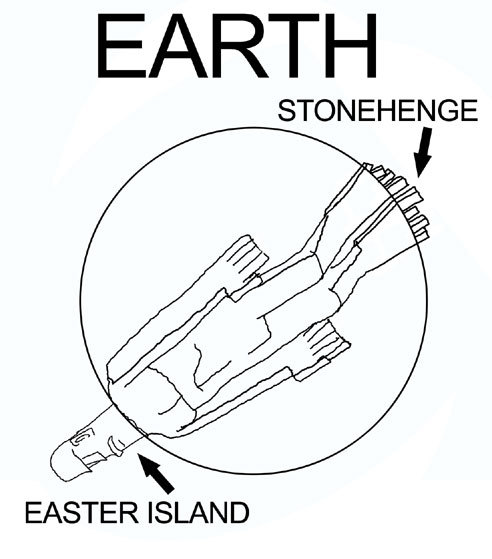
hammpix: For those of you who don’t understand archaeology, I...
↧
Science sinks teeth into Neanderthal weaning habits
Science sinks teeth into Neanderthal weaning habits: PARIS: Neanderthals may have started weaning...
↧
Archaeological News: Parts of Dead Sea Scrolls, world's oldest biblical manuscripts, are for sale _ in tiny pieces
Archaeological News: Parts of Dead Sea Scrolls, world's oldest biblical manuscripts, are for sale _...
↧
↧
Archaeological News: Clear evidence of Roman road in North Wales
Archaeological News: Clear evidence of Roman road in North Wales : archaeologicalnews:
CLEAR...
↧
Archaeological News: Skeleton found on cliff-top
Archaeological News: Skeleton found on cliff-top: archaeologicalnews:
Archaeologists have...
↧
Archaeological News: Why did our ancestors start walking upright? Ancient terrain may hold clue
Archaeological News: Why did our ancestors start walking upright? Ancient terrain may hold clue:...
↧