After 500 Syrian soldiers enter demilitarized zone near border, Israel complains to UN. Israel files official complaint to the UN after Syrian security forces came near the Golan Heights border, violating agreement signed in 1974. Syrian army forces crossed the demilitarized zone near the border with Israel in the Golan Heights last week, a highly unusual incident, on what is considered a quiet border.
↧
500 Syrian Soldiers Enter Demilitarized Zone Near the Israeli Border
↧
When visitors come to an archaeological site and ask if you're doing construction work:
The number of people who have never heard of archaeology astounds me.

↧
↧
Field Notes, 27/6/12
Wednesday 27/6/12
Field Notes/Pottery Wash/ Lecture
FN:
Area-C & Square- KK21
4:00 -Wake, 4:30-Load Bus, 4:42- Bus Departs, 5:09-Bus Arrives, 5:20-Dig
After arriving on the site, we unloaded the bus and went to our squares. After thirty mins of digging, hoeing with a tarrea, removing stones, dirt, and pottery we realized in certain sections of our square we had different color and texture of sediment. Upon further examination, it was apparent that there were several separate mini-areas.
One area was bedrock; the soil was a mixture of grey top soil and another was of red fine sediment which contained rubble or possible fill of the Hellenistic period. To combat this, we dug and scrapped the top soil & bedrock in order to arrive at the same period. We did so by removing the soil and separating out the pottery. Separate locus where made for finds in the “new soil”.
We made new locus sheets, got new tags/find buckets, and continued in this fashion to progress the entire 5 by 5 square to the same approx level. The day quickened after that. Many bucket chains occurred. We did not count the buckets but I know our square alone rivaled the hundreds. After our last bucket chain, we cleaned and measured the square individually as well as the area; moreover, we collected all buckets, tools, and water bottles-brining them to the bus for loading. The bus arrived at approx 1pm. We left at approx 1:15pm. We then ate, showered, and rested in preparation for pottery washing and the evening’s lecture.
Post Script, while I did find today exhausting and full of new bruises- I really enjoyed working hard together. I also enjoyed finally seeing some more progress in my square and area as a whole. JJ21 is proving fruitful as well as JJ22. I am going to try to go to bed early tonight because I am so excited for tomorrow.
PW:
- Pottery washing was at 4:30pm and lasted an hour and one half or so.
LN:
David in Israelite & Jewish History: The Archaeology So Far.
By Prof. Michael Pytlik, Oakland University
I-TEXTS, TRADTIONS, & ARCHAEOLOGY
A-CONCERNING DAVID
1-Rich Biblical Tradition
2- Rich Post-bib tradition in western culture/art
3- This shed light on the past
4- But what can we really say?
—— many try to find ties to real history to answer this question
B-What do we know?
1-Tradtion
- Father was Jesse
-Sheppard
-Warrior with/for God
-King
-Poet?
- Political prowess/ alliances
-United Monarchy?
-Centralizer of all cult in region
C- Dates?
1- 1000-965
2- BUT WHAT DOES THIS TIME PERIOD SHOW US???
3- Identify Forming
4- Cult
5- God king & Human King
6- Bible as text
7- Other text refer to the House of David
8- Dynasty last for 400 years
D-David’s Jerusalem
1-Debates continue to this day
2- What was the extent of David’s kingdom?
E-Importance of Jewish tradition
1- “house of David”
2- God’s most favored
3- Rep continues
4- Cult founder
5- MARKER OF THE MESSIAH!
6- Vassel King/Kingdom
F- David in Bible
1- Samuel
2- A and B patterns
3- B verses are determined to be older because of language and other factors.
4- Truth in B verses?
5- Are type stories
6- Examples: II Samuel 27:5-7 refers to Ziklag/ “Tel Sera”, which is a
City given to David by Philistines
G- David as Biblical text
1- Poet? Writer?
2- Either written by or for David
3- Prophetic Support- Much religious concentration
H- David as King
1-After Saul
2- Unity of North/South
3-Ideal King from an Ideal Time
I-David as a cult leader
1-No developed theology
2- Emphases on RITUAL
3-Ezra reference David as the founder of the cult and the protector of the Arch of the Convenient.
J- Common Themes
1- “HOUSE OF DAVID”
2- Talmud & Traditions
3- Egypt and Assyrian reference to the tradition of David/Israel as a people
4- Biblical text
K- Tel Dan Steele
The only non-bib text reference to the David (THE HOUSE OF DAVID)
L- Saul and Pre=David?
1- No archaeology or text evidence of unity
2- Always in warfare (internal and external)
3- Pressure
4- Was a military leader not a true king
5- Lost prophetic support
M- Solomon
1- Dates??= approx 965-920 BCE
2- B/c of David he as power
3- Builds first temple
4- No real Philistine threat
Lecture occurred errors when we temperately lost power, I was unable to continue with note taking on more of the archaeological aspects of the lesion. Sadly. However there was motion of royal capitals and off the three cities of the noted biblical fortification/destruction from the time of David/Solomon, as well as the Solomon gate style.
↧
“Frankenstein” Mummies Found Off Coast of Scotland
“Frankenstein” Mummies Found Off Coast of Scotland:

The adult female skeleton from Cladh Hallan. This mummy’s lower jaw, arm bone and thighbone all came from different people
“Mummies found off the coast of Scotland are Frankenstein-like composites of several corpses, researchers say.
This mixing of remains was perhaps designed to combine different ancestries into a single lineage, archaeologists speculated.”
via LiveScience.com
↧
unhistorical: July 24, 1911: Machu Picchu is...


July 24, 1911: Machu Picchu is (re)-discovered.
In the fifteenth century, Machu Picchu was built by the flourishing Inca Empire for purposes that are still uncertain. Some scholars theorize that it was used as a sort of convent for the “Accla Cluna”, or “Virgins of the Sun”, while many believe it was used as a royal retreat for the Inca emperor Pachacuti. The orientation of the site, positioned so that the sun aligned with nearby mountains during solstices and equionxes, suggests that Machu Picchu was sacred to at least some degree. Machu Picchu may have even been an agricultural testing ground of sorts, used to experiment with terraced farming techniques. Whatever the city was, it was not used for very long - by 1600, it had been abandoned, its residents either dead from disease or forced out by the conquistadors. For centuries, Machu Picchu remained hidden and unknown, an archaeological treasure hidden by jungle and the surrounding mountains.
In 1911, an American named Hiram Bingham III (a possible real-life inspiration of Indiana Jones) became one of the first outsiders to visit the ruins in probably hundreds of years. Really, Bingham did not “discover” Machu Picchu; locals knew of the site, and others claimed to have visited the site before Bingham, but he was the first to excavate and publicize it. In 1983, it became a UNESCO World Heritage Site - “an absolute masterpiece of architecture and a unique testimony to the Inca civilization.”
↧
↧
That Moment When..
You realize that all you are looking for is that someone who when you say, ”Babe, lets take a sabbatical and go to Machu Picchu next week.”
And he responds “Grace, we cannot just do that….(90 seconds later) Sweetheart, are the suit cases in the front hall or the garage?”
↧
Field Notes, 28/6/12
Thursday 28/6/12
Field Notes/Touring/Pottery Washing/ No Lecture
FN:
Area-C
Square- KK21
4:00 -Wake
4:29-Load Bus
4:43- Bus Departs
5:15ish-Bus Arrives
5:20-Begin to Dig
We began in Area C as always. I continued in my square of KK21 at about 5:20am. The sun was still low and the light was dim and the air was cool. We continued where we left of yesterday. The morning progressed slowly but by the time it was “Coffee Break” we had worked up to a more hastened pace. All of the digging, scraping, and removing resulted in little pottery finds as compared to other mornings but the number of rock and bucket chains rivaled yesterday for sure. But we did discover more about our square, moreover, Area C is proving to be quite interesting on the whole.
For example, we discovered that the rubble and collapsed rock walls where most likely not a wall but fill from the Hellenistic period. On the bed rock we unearthed jar handles and rims as well as a tabun (oven) on the border of KK21 and JJ21.
We may reach the Iron Age soon, perhaps at the beginning of the next week. Also we left a handle and profile of a jar/vessel “in-situ” because Thursdays are our short days. We toured after having lunch on the site at about 1:30. We cleaned up at 12:05 instead of 12:45.
TN:
We toured the two sites of Socho and Tel Azeka as a group to learn about biblical archaeology and the geology of the region. The tour was very informal but very informative as well as visually stunning/breathe taking. We got an orientation about the site and got to wonder and see to get more info about the location after site seeing. The main conversation was concerning Judea and the geo-political experience during various time periods. After both tours were done we straight back to the bus after climbing the Mountain that is Socho! We washed pottery at about 5:30.
PW:
Washing was very hot, we didn’t have time to shower until after pottery wash. We began at about 5:30 rather than 4:30. We showered and ate dinner. There was no lecture so we prepped for our weekend of touring the North. Akko will be great.
NOW COMES DOWN TIME & SLEEP!
↧
Archaeologists Discover “New” Ancient Language from the...

Archaeologists Discover “New” Ancient Language from the Eighth-Century B.C.E.
Bible and archaeology news
• 05/11/2012
When Cambridge archaeologist John MacGinnis examined a tablet listing the names of 60 women found at an Assyrian governor’s palace in southeastern Turkey, he noticed that most did not bear resemblance to other ancient Near Eastern names or languages. As names were usually formed out of ordinary words, the tablet from ancient Tushan indicates the discovery of a “new” ancient language.
The international team of archaeologists working at Tushan (Ziyaret Tepe) found the tablet in an archive, suggesting that the list may have been created as a record of working people kept for economic reasons. MacGinnis believes the women, whose names include Ushimanay, Alagahnia, Irsakinna and Bisoonoomay, came from the Zagros Mountains in Western Iran. During the 8th-century B.C.E., the Assyrian kings Tiglath Pilasser III and Sargon II carried out military campaigns in the Zagros area, a region whose ancient languages are not well known.
↧
Ancient language discovered on clay tablets found amid ruins of 2800 year old Middle Eastern palace
↧
↧
Field Notes, 1/7/2012
Sunday 1/7/12 Field Notes
FN:
Area(s)-C and A
Square(s)- C-KK21 A-(all over)
Wake: –In Akko
Breakfast
Load Bus to Head back to Hostel
Bus Arrives at Hostel 11:45AM
Lunch at Hostel at 12ish
Bus Departs Hostel to Kh. Q. at 12:30PM
Dig at 1-8pm
At approx 1pm we arrived on site at Kh. Q. to begin the evening dig. I was in area C, as usual. The sun was hot. Water was as important as ever, if not more so. It was beautiful to see the landscape at such opposing times of day. The sun set was absolutely gorgeous, but more about that later.
We began in area C only to be moved to area A for about an hour or so. Most of the square supervisors were unable to get to the site until 2:30pm, so we helped about area A because their volunteers wouldn’t get to the hostel until dinner. In A, we helped move earth, rubble, and floating fill,—AKA rocks.
Then we moved back to our area of C. It was nice to be back in C with everyone. I was back in KK21, working where we left off. We worked hard in order to try removing the Hellenistic Fill which remained. Much earth and many stone where removed. MANY BUCKET/ROCK CHAINS OCCURRED. Little pottery was found until later in the day.
We left some jars and handles “in situ” so to be cleaned more, and photographed over the weekend. We now unearthed and removed them. Once again, while digging it was difficult to find all of the bedrock. We are able to find it in some areas of the squares but not all. I think that perhaps the room that we are in might have been built on natural or manmade slopping bedrock. The bedrock appears to be higher in KK 20 as well as JJ20 & JJ21.
Back to the bedrock areas, however, we are able to find Iron Age pottery here on the bedrock, not only in our square but others as well. This is interesting and raises more questions. As well as maybe goes with my thoughts about the squares and room layout of the new part of AREA C. The vessels appear to be “complete” yet fully broken vessels of variation. Perhaps this calls for a destruction layer. We have not found evidence of a fire, but this does not rule out destruction.
As the evening came, many photographs were taken. We (Kat & I) measured our square(s) as well others in Area C. We did so several times throughout the day because we removed such numerous amounts of earth (both soil/sediment and rocks/rubble). We cleared out two whole pottery buckets as well as another half bucket which had its own locus.
We cleaned the whole Area quickly; once everything was finished we got to the bus and rode home to the hostel for dinner and showers. We did not have pottery washing, I am excited to see what two days of pottery washing buckets looks like after digging tomorrow.
I am exhausted but terribly excited to see what is to come in the next 2 weeks. Tomorrow I top draw.
↧
Feild Notes, 2/7/12
Monday 2/7/2012
Field Notes/ Pottery Washing/ Lecture
FN:
Area-C
Square- KK21
Daily Height- 325.05
4:05 -Wake
4:34-Load Bus
4:43- Bus Departs
5:20ish-Bus Arrives
5:30-Begin to Dig
The day began with the continuation of yesterday. It has been only 9 hours since we were here working so today seems like a mega day with yesterday. We worked in our Iron Age fill (which lay below the Hellenistic). Iron age fill now covers the majority of square KK21. The fill naturally contains shaped stones, rubble/rocks, and packed earth, but also more pottery. Likewise, potential insulations of unknown function are present. In said installations are where we are finding some of the larger pottery sherds.
Dusting and cleaning the area as a whole (to find all the bedrock) as well as all the vessels which have gradually been left “in-situ” became important. Also, more tabun material is found, we are cleaning around this area too, to find the whole tabun. By the end of the day, we did.
The agenda did include cleaning but soon we (as an Area) removed the entire bulk between the six JJ and KK squares. We used pick axes, shovels, buckets and the like . We removed the entire bulk rather quickly. Many rock and bucket chains occurred. By the afternoon, we continued and our Square continued to discover more vessels which we also left “in-situ”; many of which were close to the tabun. Later, the tabun proved a point of embarrassment for me twice today. I also most tripped over it and later while “double fisting” my coffees into the site, I ALMOST spill it on the tabun. And of course right in front of Kyle. Classic clumsy Grace. NEVER again will I bring my coffee into the squares. (FACEPALM).
By the end of the day the earth that was removed was quite significant. We did the measurements through out all the KK squares together as a square for a while. However, I completed the reminder of the measurements with Kat and was only able to do a quick top sketch of the square- including features, artifacts, ground color info, the measurements, and the like.
I was unable to finish it up in a beautiful bow but not too bad for my first quick one. Now we cleaned and loaded the buses. Time for lunch, pottery washing, and lecture.
PW:
We began at 4:30pm. Today there are two days of buckets. There were many, many buckets; however, we got it done rather quickly.
LN:
Archaeo-Zoology at Khirbet Qeiyafa
By Ron (Our Bone Guy)
Archaeo-Zoology- the study of animal bones (those animals with vertebrae)
An Intro:
Bones
Both Centaur and Human
All animals with vertebrae are included
Moreover, all animals with skeletons
In Excavation:
Teeth
Other Bones
Shells
Soft Tissues
Skin
(Of both animals and rarely people)
Questions Answered and Posed by Presence of Bone:
Who lived here?
Where/What did they eat?
How did the bones get here, natural or man?
Handling Bone:
Do Not Touch with Bare Hands
Fragile
Use Foil
Gets Own Bag
Typically:
All we have is bone
No meat
No marrow
No blood
No tissue
Common Secondary Products:
(No Animals were killed, just products used)
Wool/Hair
Milk
Animal Waste for Agriculture
Etc
What can bones help us reconstruct?:
Diet
Economy/Trade
Mode of Subsistence
Food Prep
Beliefs
Environmental Factors
What could the source of Bone be?
Food
Pets
Transport
Labor
Accidental Intrusions into Soil Layers:
Are unbelievably common and include
Raptor Prey
Natural Moralities
Pests
Finding Bone Through Sifting:
Wet
Dry
VERY SMALL FINDS!!
Determining Age:
Fusion of Bones
Dental Eruption
Dental Attrition
General Size
General Ware & Use
Aging Teeth: Signs differ from Elderly, to Adult, to Youth
Determining Sex/Gender:
Size
Shape
Information from Skulls:
Age Can Be Determined
Sex Can Be Determined
Pathology:
On Bone & In Bone »> Presence of or lack of Disease can be a good indicator of cause of death
Cut Marks:
Evidence of Butcher can only be seen after cleaning
Burt Bone:
Human indication of interact is common but not logically required
Color of bone can determine the temp/heat of fire
The heat of the fire determines what cause of burning
Human Cause (Med to High Temp and High Concentration of location)
Natural Cause (Med to Low temp)
Either (Med Temps)
Location of Bones:
Indicate function of bone/ a future product? Used for food?
Often found around tabun/ovens
Sheep/Goat Bones:
Are common
Cannot be determined for 100% the difference(grouped together as “Sheep/Goat” Bones)
The ankle of Goat/Sheep can be used as a die for an ancient die game (are found at sites all over the world)
Bone Worship:
Tel Safi (great examples)
9th Cen. BCE
(LATE IRON AGE)
Most Common: Cow
Raw Material and Products can be made from bone****
Cylinder Seals:
Made from animal bones
Often Depict Animals
Sometimes are exotic animal bones or depictions
Indicate Trade
Animals Used in Rituals:
Religious/ Ritual
Very specific use and location
“Ritually local”
Bones from Qeiyafa:
Goat/Sheep
Cow
Deer
Wolf
Camel
Donkey
Fish (Bones & Scales)
Common Animals from the Region:
Goat/Sheep
Cow
Camel
Donkey
PIGS
Judean Sites:
NO or Little Pig Bones (Less than 1%)
Kh. Q. HAS NO PIG BONES AT ALL AT ANY STRATA LEVEL
↧
Tel Lachish Identified first as Lachish by Albright in 1929, the...

Tel Lachish
Identified first as Lachish by Albright in 1929, the tell was excavated by James Leslie Starkey 1932-38 and by Tel Aviv University 1973-87.
Lachish is generally regarded as the second most important city in the southern kingdom of Judah. It enters the biblical narrative in the battle accounts of Joshua, Sennacherib and Nebuchadnezzar.
↧
sagenundlegenden: Gold flanged waist torq, Ireland,...

Gold flanged waist torq, Ireland, 1300-1100 B.C.
It was uncovered by an amateur metal detector who took it for a modern car spring. Thought to be a waist torq because of its size, it was probably coiled like this to fit into a burial vessel.
Via @medievalist on Twitter
↧
↧
emmakale: Quinta da Regaleira-Sintra ~ PortugalAn underground...
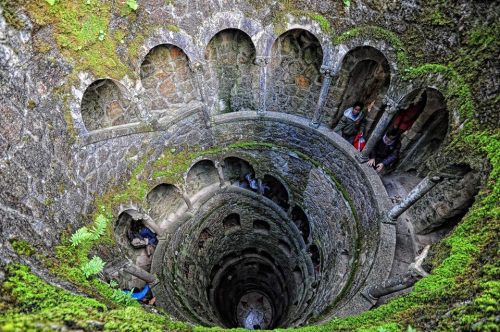
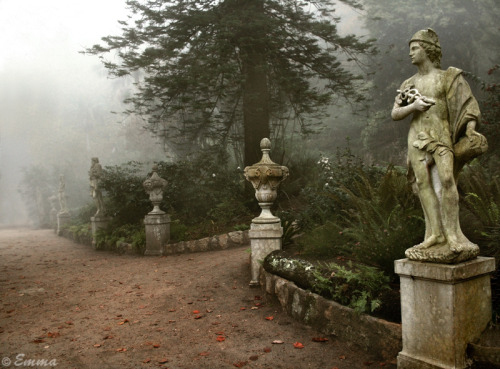
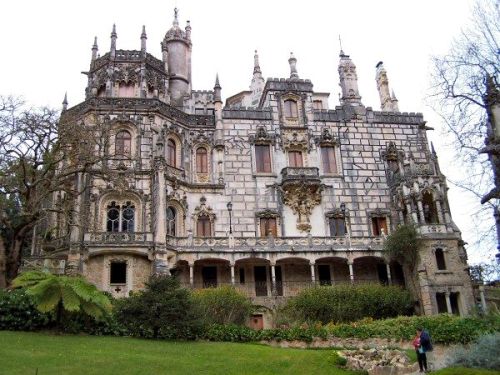
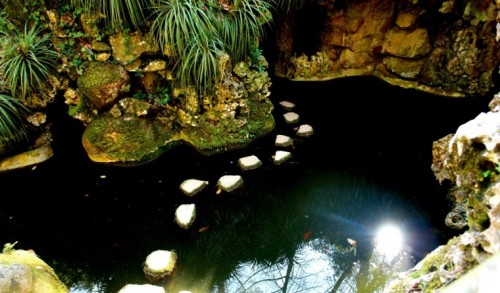
Quinta da Regaleira-Sintra ~ Portugal
An underground tunnel with a spiral staircase, supported by carved columns, down to the bottom of the well through nine landings. The nine hole round landings, separated by fifteen steps, evoke references to Dante’s Divine Comedy, and may represent the nine circles of hell, paradise, or purgatory.
The well is connected to laberíticas caves that lead to a spooky garden surrounded by a lake.
The land that is now Quinta da Regaleira had many owners through time. But in 1892 it belonged to the Barons of Regaleira, a family of rich merchants from Porto, when it was purchased that year by Carvalho Monteiro for 25,000 réis. Monteiro wished to build a bewildering place where he could gather symbols that would reflect his interests and ideologies. With the assistance of the Italian architect Luigi Manini, he designed the 4-hectare estate with its enigmatic buildings, believed to hide symbols related to alchemy, Masonry, the Knights Templar, and the Rosicrucians. The architecture of the estate evokes Roman, Gothic, Renaissance and Manueline architectural styles. The construction of the current estate commenced in 1904 and most of it was concluded by 1910.
↧
At London Olympics, women’s athletes’ wardrobes are source of debate
At London Olympics, women’s athletes’ wardrobes are source of debate:
Best line: Still, that represented a major step forward from the ancient Olympics, in which women weren’t allowed to compete under penalty of death.
↧
Field Notes, 3/7/12
Tuesday 3/7/12
Field Notes/Pottery Wash/ Lecture
4:25 -Wake
4:35-Load Bus
4:43- Bus Departs (without me)
FN:
Sadly, I was suffering from heat exhaustion and dehydration. I was feeling poorly, went to the bus, but did not get on. I did not go to the excavation this morning. I got the skinny about that I missed and I got several more hours of sleep which allowed me to function. I was able to eat a light lunch and prepare for pottery washing and lecture. Lunch was at about 1:45, Pottery washing began at 4:30, the Lecture began at 6:30 rather than 7.
PW:
Pottery washing was at 4:30pm and lasted an hour and one half or so.
LN: 3/7/12
The History of the Alphabet
By: John Waybright
Write:
Facts
History
Literature
Bible:
The History inside the literature that is the bible
The Alphabet:
The Acrophobic Principle
—-The Sound Unit Gets the Symbol, Rather than the word itself.
The Semitic Form is the base of the modern form of languages with true alphabets
Now, 23-30 Symbols (signs) make up all the words of the given language
There is now a family tree of all worlds’ languages
—-Phoenicians (Semitic form)
—-Greek (Indo-European)
—-Etruscans (European)
—- Roman (Indo European)
And so on, and so forth…
What is your favorite letter?:
(Let’s say it is Aleph or A)
It changed shape and form over time and space

DNA of Alphabet:
True beginning is from the 12 century BCE
Early History of Symbol Writing (an almost alphabet):
Development of writing (script) began in Mesopotamia and Egypt
Development of Alphabet:
Came from Sinai Peninsula & Ancient Cannon
Qeiyafa inscription because important in this story
Inscriptions:
Zayit (A, B, C, Duruy)
Qeiyafa
Languages vs. Scripts:
Scripts are symbols or rather a way(s) of writing down oral language systems
Remember, there are far more languages than scripts
Lang= 1 million Years Ago
Scripts= 4,000 BCE
There was (in in some cultures still is) a heavy weight on oral traditions because of the “late” development of scripts and writing.
Forms of Inscriptions:
Graffiti
Votive
Weights
Seals
Steele
Burial Markers
Coins
Cuneiform? Is it an Alphabet?:
Theory/Development out of Mesopotamia
Is abstract symbol writing
Uses many Signs
Hard to use
Not common
Not a true alphabet
The Rebus Principle:
Using an abstract symbol to represent wither a sound unit OR an entire word
Close to alphabet, but not quite.
—-Example: the symbol of a fish could stand for a FISH or THE FIRST SOUND OF THE WORD USED TO PHYSICALLY SAY “FISH” OUT LOUD
—-Is hybrid between Pictographic and Phonic (Imagery and Abstract at the same time)
↧
German Archaeologists Unearth Tomb of Mayan Prince at Uxul
German Archaeologists Unearth Tomb of Mayan Prince at Uxul:
A team of archaeologists from the University of Bonn, Germany, has discovered a tomb of a young prince at the ancient Mayan city of Uxul.
↧
↧
Archaeological News: Archaeologists Unearth Extraordinary Human Sculpture in Turkey
Archaeological News: Archaeologists Unearth Extraordinary Human Sculpture in Turkey:

A beautiful and colossal human sculpture is one of the latest cultural treasures unearthed by an international team at the Tayinat Archaeological Project (TAP) excavation site in southeastern Turkey. A large semi-circular column base, ornately decorated on one side, was also discovered. Both
pieces are from a monumental gate complex that provided access to the upper citadel of Kunulua, capital of the Neo-Hittite Kingdom of Patina (ca. 1000-738 BC).
“These newly discovered Tayinat sculptures are the product of a vibrant local Neo-Hittite sculptural tradition,” said Professor Tim Harrison, the Tayinat Project director and professor of Near Eastern Archaeology in the University of Toronto’s Department of Near and Middle Eastern Civilizations. “They provide a vivid glimpse into the innovative character and sophistication of the Iron Age cultures that emerged in the eastern Mediterranean following the collapse of the great imperial powers of the Bronze Age at the end of the second millennium BC.”
↧
culturalsecurity: Conflict and Looting Threaten Syrian...


Conflict and Looting Threaten Syrian Archaeological Heritage
In May, Interpol joined UNESCO’s warning of “imminent threats” to Syria’s cultural heritage, which is “particularly vulnerable to destruction, damages, theft and looting during this period of turmoil”. The international criminal police organization joined the Syrian National Central Bureau in Damascus in issuing a search for a number of mosaics stolen from the ruins of Apamea in Syria’s Hama province.
Situated on the crossroads of the ancient Orient and Occident, with the Levantine routes of the old Silk Road attracting all manner of art, commerce and culture – as well as conquerors and crusaders, Syria today bears the stamp of millennia of Middle Eastern history.
“The country has layers and layers and layers of civilisation. It’s one of the richest countries in the world in terms of heritage,” says Veronique Dauge, chief of UNESCO’s Arab States Unit. “Syria has six sites on the World Heritage list – which are the ones we tend to focus on – but it does not take away from the others. Syria also has sites on the UNESCO tentative list [that are still being considered] and there are numerous other sites across the country.”
Syria is probably the only country in the world where the political and commercial capitals – Damascus and Aleppo respectively – compete for status of world’s oldest continuously inhabited city. Read more
For similar news stories visit http://culturalsecurity.net/newssummary.htm
↧
Archaeological News: Brewing Stone Age Beer
Archaeological News: Brewing Stone Age Beer:

Beer enthusiasts are using a barn in Norway’s Akershus County to brew a special ale which has scientific pretensions and roots back to the dawn of human culture.
The beer is made from einkorn wheat, a single-grain species that has followed humankind since we first started tilling the soil, but which has been neglected for the last 2,500 years.
“This is fun − really thrilling. It’s hard to say whether this has ever been tried before in Norway,” says Jørn Kragtorp.
He started brewing as a hobby four years ago. He represents the fourth generation on the family farm of Nedre Kragtorp in Aurskog-Høland, Akershus County.
Part of the barn has been refurnished as a meeting room, but space was also allotted for small-scale beer production.
↧