Humans may have Neanderthals to thank for brains, U of C research suggests:
The study, which...
↧
Humans may have Neanderthals to thank for brains, U of C research suggests
↧
slothisticated: Heracleion Photos: Lost Egyptian City Revealed...


Heracleion Photos: Lost Egyptian City Revealed After 1,200 Years Under Sea
It is a city shrouded in myth, swallowed by the Mediterranean Sea and buried in sand and mud for more than 1,200 years. But now archeologists are unearthing the mysteries of Heracleion, uncovering amazingly well-preserved artifacts that tell the story of a vibrant classical-era port.Known as Heracleion to the ancient Greeks and Thonis to the ancient Eygptians, the city was rediscovered in 2000 by French underwater archaeologist Dr. Franck Goddio and a team from the European Institute for Underwater Acheology (IEASM) after a four-year geophysical survey. The ruins of the lost city were found 30 feet under the surface of the Mediterranean Sea in Aboukir Bay, near Alexandria.
↧
↧
herbaljabbage: Ancient Roman Women Exercising in Bikinis....

Ancient Roman Women Exercising in Bikinis. Roman Mosaic From Villa Romana del Casale outside the town of Piazza Armerina, in Central Sicily. Mosaic may have been made in the 4th century A.D. by North African artists
Just incase anyone needed any more proof that what is considered the ideal female form is entirely arbitary, have some Roman women with muscles, bound breasts, wide hips and tiny feet.
↧
Archaeological News: Underground tunnel discovered at Sobibor
Archaeological News: Underground tunnel discovered at Sobibor: archaeologicalnews:
WARSAW, Poland...
↧
artemis444: Columns of Takhte Jamshid ruins by Germán Vogel on...

Columns of Takhte Jamshid ruins by Germán Vogel on Flickr.
Via Flickr:
【Takhte Jamshid, Iran】 Guard post chair overlooking the columns of the ruins of Takhte Jamshid (Persepolis), the once capital of Iran in the times of the Achaemenid empire.
↧
↧
trowelblazers: Tatiana Proskouriakoff: Drawing out the ancient Maya
trowelblazers: Tatiana Proskouriakoff: Drawing out the ancient Maya: trowelblazers:
Tatiana...
↧
trowelblazers: Patricia Vinnicombe: Trowel Blazer of the Drakensberg Mountains
trowelblazers: Patricia Vinnicombe: Trowel Blazer of the Drakensberg Mountains:...
↧
worldofmesopotamia: A NEO-ASSYRIAN LIMESTONE HEAD OF...

A NEO-ASSYRIAN LIMESTONE HEAD OF PAZUZU
CIRCA 8TH-7TH CENTURY B.C.
The demon with its mouth open revealing teeth, fangs and tongue, with thick double-outlined lips, a leonine whiskered snout and thick, striated beard and mustache, the small eyes with the pupils indicated, the brows ridged, with human ears and a bald pate, the tapering gazelle horns slung back over his forehead.
↧
Ancient Mummy Comes Out Of Its Coffin
Ancient Mummy Comes Out Of Its Coffin: BOSTON — A 2,500-year-old Egyptian mummy is coming out...
↧
↧
hungtingdragons: The 2013 Adventure : British...

The 2013 Adventure : British Museum
Today’s adventures took us to The British Museum in London. A fantastic adventure for kids and…
↧
nordic-drifter: New archaeological evidence points to a...
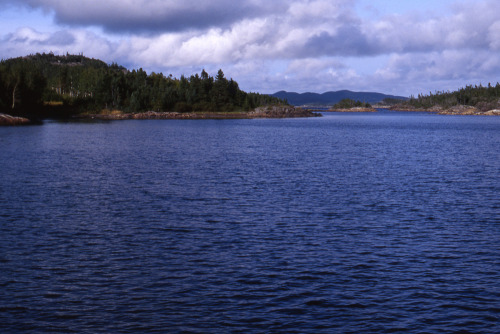
New archaeological evidence points to a previously unknown Viking exploration of Notre Dame Bay in Newfoundland, Canada.
Archaeologists even suggest that the voyage, which lead from L’Anse aux Meadows and deep into the bay, may have lead to the first contact between Vikings and Native Americans.
The evidence for this comes largely from two jasper artifacts used by the Norse to start fires. The artifacts themselves were found at L’Anse aux Meadows close to a known Viking site, but chemical analysis suggests they originated in the Notre Dame Bay some 140 miles away.
↧
archaeology: To improve today’s concrete, do as the Romans...

To improve today’s concrete, do as the Romans did
In a quest to make concrete more durable and sustainable, an international team of geologists and engineers has found inspiration in the ancient Romans, whose massive concrete structures have withstood the elements for more than 2,000 years.
Using the Advanced Light Source at Lawrence Berkeley National Laboratory (Berkeley Lab), a research team from the University of California, Berkeley, examined the fine-scale structure of Roman concrete. It described for the first time how the extraordinarily stable compound – calcium-aluminum-silicate-hydrate (C-A-S-H) – binds the material used to build some of the most enduring structures in Western civilization.
The discovery could help improve the durability of modern concrete, which within 50 years often shows signs of degradation, particularly in ocean environments.
The manufacturing of Roman concrete also leaves a smaller carbon footprint than does its modern counterpart. The process for creating Portland cement, a key ingredient in modern concrete, requires fossil fuels to burn calcium carbonate (limestone) and clays at about 1,450 degrees Celsius (2,642 degrees Fahrenheit). Seven percent of global carbon dioxide emissions every year comes from this activity. The production of lime for Roman concrete, however, is much cleaner, requiring temperatures that are two-thirds of that required for making Portland cement.
The researchers’ findings are described in two papers, one that was posted online May 28 in the Journal of the American Ceramic Society, and the other scheduled to appear in the October issue of the journal American Mineralogist.
↧
Roman villa found at Teston after 140-year mystery
Roman villa found at Teston after 140-year mystery: Archaeologists have rediscovered the site of a...
↧
↧
tselentis-arch: Huge ancient underwater building discovered in...


Huge ancient underwater building discovered in Alikanas, Zakynthos, Greece
Athens, June 7, 2013 — According to the local press 1,2, the greek Department for Underwater Antiquities discovered lately a 30-acre wide archaeological area in Alikanas, Zakynthos, including at least 20 pillar bases, an ancient cobblestone pavement and other building parts, probably belonging to at least one public building.
All pillar bases feature a center incision of ca 34 cm diameter, which, according to Angleiki Simosi, head of the Department, points to that the pillars were made out of wood. The ruins were located at a depth of 2 to 6 meters.
The findings have not been dated yet, due to the lack of pottery pieces so far, but judgung from the size of the main building, archaeologists speculate that the site must have been part of an important ancient settlement in the region.
The archeological survey is scheduled to continue in order to map the area..
↧
violette-royale: Rock art, Vitlycke, Sweden, dated to the Bronze...

Rock art, Vitlycke, Sweden, dated to the Bronze Age (c. 1700-500 BC), probably the later part of the period, based on the typology of the sword scabbard. Source: Vitlycke museum
The carving, apparently depicting a male and a female figure in an embrace, is often interpreted as a hieros gamos, a ritualised sexual act representing the marriage between a god and a goddess, or between a human and a deity.
An interesting parallel to the axe that the third person holds above the couple is the use of Thor’s hammer, Mjöllnir, to bless weddings in later pre-Christian Scandinavian mythology (as mentioned in Thrymskviða).
↧
photosfromperu: The funerary site of Karajia, near...

↧
Dig This Video: How to Tour Pueblo Country ~ Western Digs
Dig This Video: How to Tour Pueblo Country ~ Western Digs: westerndigs:
Interesting video about what...
↧
↧
Zahi Hawass is back
Zahi Hawass is back: The famous, and at times controversial, Egyptologist is free of legal charges,...
↧
The Boomerang Graffito (Or Bad, Bad, Luther B!) : NPR
The Boomerang Graffito (Or Bad, Bad, Luther B!) : NPR: Be really careful when you carve your name...
↧
Vietnam Maritime Archaeology Project Center
Vietnam Maritime Archaeology Project Center: Vietnam has a very long coastline (more than...
↧