Quantcast
Channel: Male Nude Photography
Viewing all 3244 articles
Browse latest View live

ancientpeoples: Funeral vessel Naqada II Period (Egypt) The...

$
0
0


ancientpeoples:

Funeral vessel

Naqada II Period (Egypt)

The vessel has a slender barrel shape with a flat bottom and a moulded rim. It is made of a light-coloured clay. Two cylinder handles for suspending ropes are attached to the shoulder. The walls of the vessel have been sectioned by the reddish brown painted decoration. In the bottom half, a row of flamingos is represented on top of a series of triangles. Between the cylinder handles are images of ships complete with their oars, cabins, and standards. Their prows are decorated with a stylized structure made of reeds. These figurative drawings with their regulating divisions and series of motifs were of great importance for the development of Egyptian two-dimensional art. The small size of this jar suggests that it was intended for the storage of precious liquids placed in the tomb for use by the deceased in his otherworldly existence.


ancientart: Ancient Greek battle helmet 

historyofyugoslavs: Gamzigrad The Late Roman fortified palace...

$
0
0


historyofyugoslavs:

Gamzigrad

The Late Roman fortified palace compound and memorial complex of Gamzigrad-Romuliana, Palace of Galerius, in the east of Serbia, was commissioned by Emperor Caius Valerius Galerius Maximianus, in the late 3rd and early 4th centuries. It was known as Felix Romuliana, named after the emperor’s mother.

The site consists of fortifications, the palace in the north-western part of the complex, basilicas, temples, hot baths, memorial complex, and a tetrapylon. The group of buildings is also unique in its intertwining of ceremonial and memorial functions.

Unique 1,300 year old olive oil factory unearthed in Tel Aviv suburb | The Times of Israel

$
0
0
Unique 1,300 year old olive oil factory unearthed in Tel Aviv suburb | The Times of Israel:

A 1,300 year old olive press found near Hod Hasharon. (photo credit: Hagit Turga courtesy of the Israel Antiquities Authority/Flash90)

Antiquities Authority rescues Byzantine-era site from being paved over in Hod Hasharon

An exceptional 1,300-year-old olive oil factory was unearthed Tuesday during excavations in the Tel Aviv suburb of Hod Hasharon. The Israel Antiquities Authority’s find, dated to the late Byzantine or early Muslim period, narrowly escaped being paved over by a planned roadway.

Excavators found a pressing floor for olives, a piping system, trenches, and cisterns that drained and stored the fresh olive oil. Stone weights used for pressing sacks of olives were found beside the ruins. By the archaeologists’ estimations, the site was an industrial concern and not private.

collective-history: Mushroom Hat This hat, shaped from the...

$
0
0


collective-history:

Mushroom Hat

This hat, shaped from the fibrous interior of Fomes fomentarius, was mailed to National Geographic headquarters by William J. O’Reardon in 1920. Its accompanying letter cataloged the cap’s dimensions and alerted the editors that this “very rare and extraordinary cap [is] made from a mushroom.”

Photograph by Charles Martin, National Geographic 

androphilia: Al-mi’raj | Wikipedia From Wikipedia, the free...

$
0
0


androphilia:

Al-mi’raj | Wikipedia

From Wikipedia, the free encyclopedia

For the Night Journey, Islamic prophet Muhammad took, see Isra and Mi’raj.

“Al-mi’raj is a mythical beast from Islamic poetry said to live on a mysterious island called Jezîrat al-Tennyn within the confines of the Indian Ocean.[1] Its name can be broken up several different ways, though is generally seem truncated as Mi’raj, Mir’aj or just Miraj. Its name is also synonymous with Muhammad’s ascent into heaven.

Al-mi’raj is a large, harmless-looking yellow rabbit with a single, 2-foot-long (0.61 m), black, spiraling horn protruding from its forehead, much like that of a unicorn.

Despite its docile appearance, Al-Mir’aj is actually a ferociously territorial predator known to be able to kill animals and people many times their own size with a few stabs of its horn. It also has an immense appetite and can devour other living things several times its size without effort. Al-Mir’aj frightens other animals and they will always flee from its presence due to this.

The people of the island were so terrified of Al-Mi’raj eating them and their livestock that they would turn to witches to ward them away as soon as the rumor of a Miraj met their ears. It was reported that only a true witch would charm the Miraj, rendering it harmless so the people could remove the Miraj from the area.

Origins

It is possible this myth originates from observations of the effects of any one of several diseases in rabbits that can create horn-like growths upon the bodies of animals, most commonly Fibromatosis and Papillomatosis.

Papillomatosis is the result of a virus infecting the skin, causing a large, red, swelling growth on the skin of the subject.[2] These red marks may have appeared to be where horns had broken off or were shed. Fibromatosis is a similar virus which infects the skin and causes the flesh of the rabbit to mat with hair, hardening into long, hard horn-like protrusions.[3] Both diseases could account for the appearance of wild, fierce (with pain) rabbits with “horns” as infected specimens have been found, catalogued and are well documented.[4]

It is also possible that this myth was started as a way for witches to make money by frightening locals with tales of ferocious man-eating rabbits and then asking them for money in order for the “threat” to be removed. This would explain the part of the lore that says that the only way to remove a Mi’raj from the area would be to have a skilled witch charm them.

Pop culture references

Al-Mi’raj has been occasionally featured in video and role-playing games.

Al-Mi’raj has been adapted into Dungeons & Dragons, as part of the 1st edition Advanced Dungeons and Dragons Fiend Folio.

In Dragon Warrior III for the Game Boy Color, Al-Mi’Raj is a low-level monster with a sleep attack used to render players helpless while it attacks. Dragon Warrior 3 Monster List Unlike the normal legendary Miraj, this Mi’raj is purple with a white horn and white cheeks. Its standard treasure is eight gold and a Leather Hat. A similar in appearance version is called the Spiked Hare in Dragon Quest VII and carries Medicinal Herbs and Bunny Tails.[5]

In the original Nintendo Entertainment System version of Dragon Warrior III, however, it was marked as a “Horned Rabbit” and portrayed as a white rabbit with ruby eyes and a red horn.[6] Its standard treasure was a medicinal herb, provided it did not run away before being defeated. This version of the Miraj is also used in Dragon Quest V for the SNES [7] while a slightly different version in Dragon Quest VII called the Bunicorn also sometimes would drop a Bunny Tail.[8]

According to lore, at the base of a unicorn’s horn is a ruby red jewel that is the concentrated essence of its power.[9] With this in mind, it is possible that Ryo-Ohki from Tenchi Muyo! could be a reference to Al-Mi’raj, albeit dehorned and thus non-dangerous to humanity.

Getting closer to the original mythology, the Devil Bunny game series by Cheapass Games is a game about horned, super-intelligent carnivorous evil rabbits that spend their time attempting world domination via an assortment of silly means and tormenting the Humans.[10][11]”

frost-at-midnight: The necropolis of Qubbet el-Hawa in Aswan,...

$
0
0


frost-at-midnight:

The necropolis of Qubbet el-Hawa in Aswan, Egypt, 2012 ~ wooden sarcophagus unearthed by archaeologists from the University of Jaen.

ancientpeoples: Gold Bracelet or Diadem Phoenician 7th-6th...

$
0
0


ancientpeoples:

Gold Bracelet or Diadem

Phoenician

7th-6th Century BCE

Tarros, Sardinia

From a rich tomb found at Tharros. Phoenician jewellery shows a variety of influences from across the Mediterranean. There are no direct parallels to this piece but the lotus flower is typical of Phoenician style, influenced by Egypt.


xiphoidprocess: I wanted to know the story behind this one. I...

$
0
0


xiphoidprocess:

I wanted to know the story behind this one. I know next to nothing about the history of Tibet, so I ended up in a Google rabbit hole where I found this is just one part of a series of photos that have been floating around the Internet. I also learned that Tibetan human bone carvings are available for sale in a lot of places, and some of those places will insist they are “full of dark energy” and the like, but I found next to nothing about their context. Frustrating. (Just y’all wait until I move to school next month and actually have academic databases to play with.) If anyone knows of anything else out there, send it my way.

But while I’m here, I give to you the only academic resource I could scare up on Tibetan skull carving. Fair warning, it’s from 1923, so it has some baggage. http://libweb.uoregon.edu/ec/e-asia/read/skulls.pdf

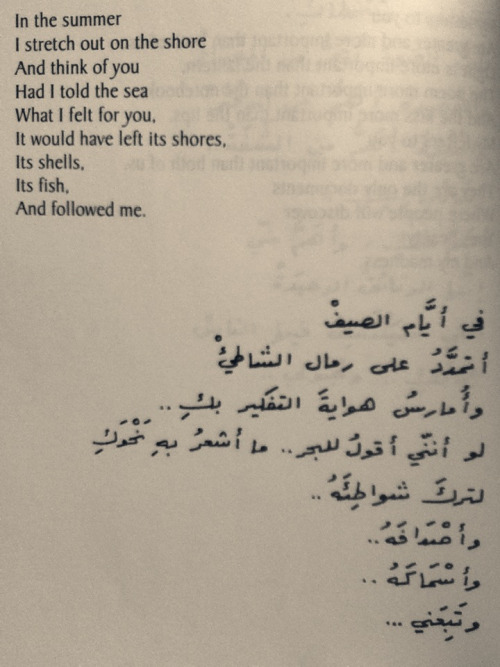
trendytraveler: Nizar Qabbani & More, More Arabic Lessons

ancientart: Ancient Mycenaean funeral mask identified as the...

$
0
0


ancientart:

Ancient Mycenaean funeral mask identified as the mask of Agamemnon, gold, found in Tomb V in Mycenae. 16th century BCE.

Currently located at the National Archeological Museum of Athens.

anthropologyyy: Closeup of a Figure of a Standing Warrior late...

$
0
0


anthropologyyy:

Closeup of a Figure of a Standing Warrior late Classic Maya Jaina style Campeche or Yucatan Mexico 650-800 CE Ceramic with pigment

Zominthos 2012: Corridor 21: Clip 1 Revealing a conical cup at...

Zominthos 2012: Room 7: Clip 1 Cleaning plasters in Room 7 at...

Zominthos 2012: Room 50: Clip 1 Mounting works for the walls of...


Zominthos 2012: Corridor 10: Clip 1 Trying to move a huge...

Zominthos 2012: Corridor 10: Clip 2 Making a mold for a big...

Archaeology's Interactive Dig- Interactive Dig Crete: Zominthos Project

$
0
0
Archaeology's Interactive Dig- Interactive Dig Crete: Zominthos Project:

The ancient Minoans are best known as seafarers, but excavations at the site of Zominthos, nestled in a plateau on Mt. Ida, Crete’s highest mountain, have shown that they were also highlanders. This important second-millennium B.C. site, located about 1,200 meters (nearly 4,000 feet) above sea level, lies on the ancient route between the palace at Knossos, the Minoans’ primary administrative center, and the sacred Ideon Cave, where many believe the legendary god Zeus was born and raised. Zominthos is the only mountaintop Minoan settlement ever to have been excavated and after just a handful of large-scale dig seasons is already yielding groundbreaking information.

Photo

True Forensics: Investigators carefully sift earth in search of more remains. Police...

$
0
0
True Forensics: Investigators carefully sift earth in search of more remains. Police...:

fuckyeahforensics:

Investigators carefully sift earth in search of more remains. Police said the remains were under a foot of dirt, likely placed there before cement was poured.

At construction site, forensic team searches for human remains

On a construction site near Memorial Park, amid large mounds of brown dirt, dump trucks and bulldozers, stood two small, white canopy tents.

Underneath the tents and the sun’s relentless heat, a forensics crew created their own 100-square-foot excavation site Thursday afternoon, digging and sifting through every inch of dirt, looking for human bones: skeletal remains belonging to someone unknown and the first piece of the puzzle Houston police were trying to solve.

As they searched, the roar of tractors and the low, bellowing boom of a wrecking ball could be heard around them as construction on the soon-to-be apartment complex continued.

The area was once the home of the Park Memorial Condominiums - torn down earlier this year - and homicide investigators believe bones were placed there more than 30 years ago when the development was being built.

Discovered by construction workers on Wednesday, the bones appeared to have been concealed between the retaining wall and underneath the pavement in what was once the complex’s parking garage.

Houston Police Department Homicide Division Sgt. Richard Rodriguez said the remains were placed under about a foot of dirt, likely before workers building the complex poured cement over the top. Crews found the remains after knocking down the retaining wall.

“The bones were placed there either by someone dumping a body or the previous construction crew (who built the development) found them and placed them there,” Rodriguez suggested.

Forensic anthropologists from the Harris County Institute of Forensic Sciences, who collected the remains, will now attempt to extract DNA from the bones, Rodriguez said. Their goal is to identify the person and determine a cause of death.

An old cemetery?

Condemned and vacant for nearly three years, the Park Memorial Condominiums, built in the late 1970s and early ’80s, were demolished earlier this year after being sold to developers, Rodriguez said.

Residents in the area drove by Thursday morning and afternoon, sneaking peeks as investigators continued to dig.

“Anytime anything like that happens, it’s an eerie feeling,” said Ralph Rodriguez, who has owned an alloy company across the street from the construction site for nearly 15 years.

Some residents say that the complex was built over an old cemetery. Investigator Rodriguez said he found records of many old burial grounds in and around the area, but hasn’t yet been able to find any that used to be in the construction site.

“I haven’t ruled it out yet and it’s still a possibility,” he said, adding that forensic investigators told him that the color of the bones indicated that they may even date back before the 1970s.

Meanwhile, Rodriguez said he’s also received phone calls from some people saying their family members went missing around the time construction began on the Park Memorial Condominiums. Those callers believe the remains could possibly belong to loved ones.

Why the bones were placed there is still a mystery, but the HPD investigator is fairly certain about one thing.

“Because of the placement of the bones, I don’t see it as an accident,” Rodriguez said.

A good starting point?

After spending Wednesday afternoon and nearly eight hours Thursday sifting through the dirt, forensic crews decided to call it a day about 4 p.m.

Unless construction crews discover more bones, investigators will end the search for additional remains.

Their hunt yielded pieces of a skull, a bone from what appears to be a nose, a few from a leg, a rib and other small fragments that have yet to be identified, Rodriguez said. That, he is hoping, will be a good starting point to putting a name and face to the skeletal remains and finding out how they ended up where they did.

“The most important thing,” Rodriguez stressed, “is trying to find an identification.”

(Source: chron.com)

Viewing all 3244 articles
Browse latest View live